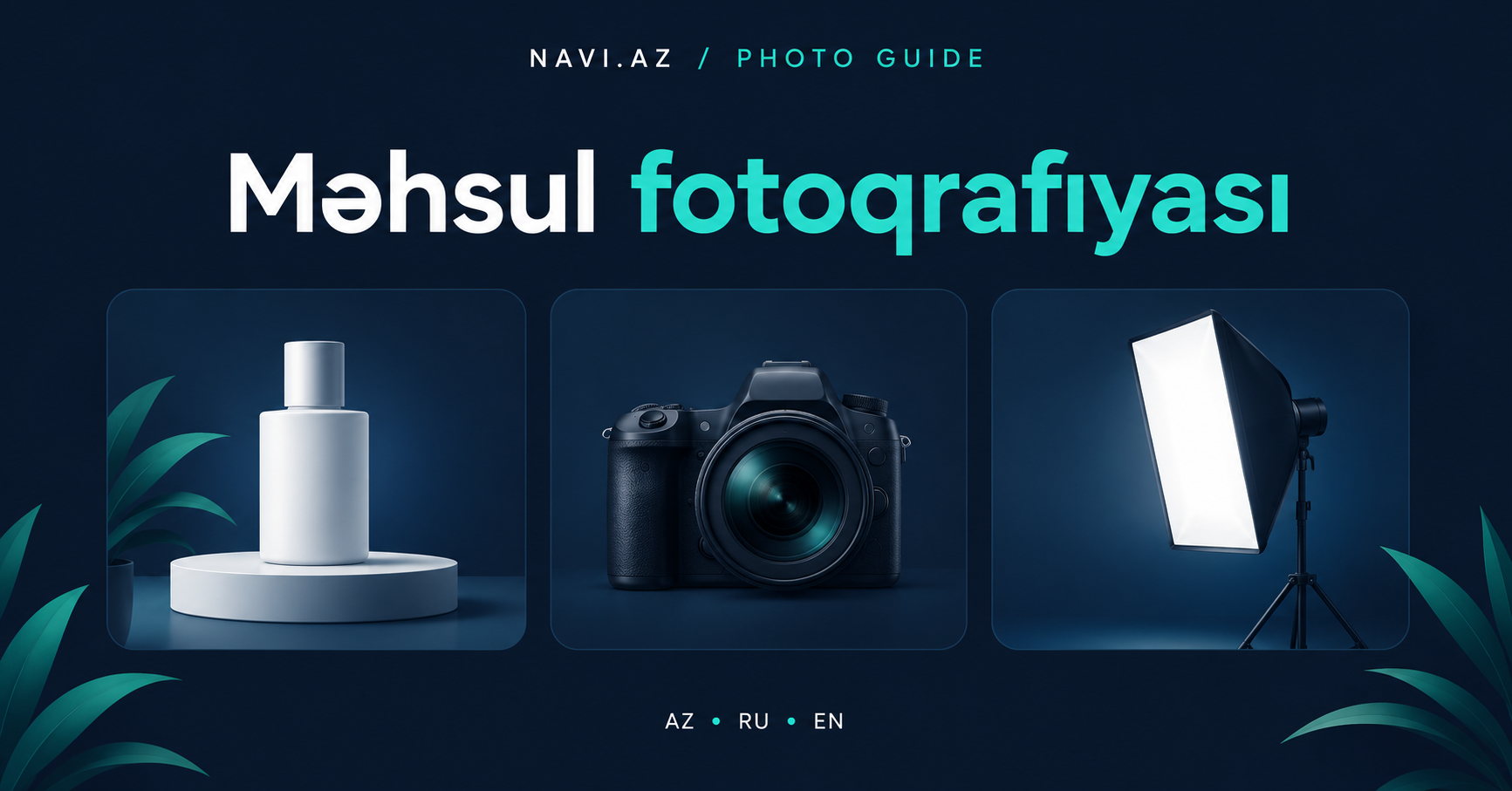
When shopping online, customers can't hold the product in their hands, so the buying decision rests almost entirely on the photos. Low-quality images with off colors can quietly hurt sales, while well-shot product photos build buyer confidence. Here's a look at the main steps behind a solid product shoot.
Background choice affects perception
A white background is the most universal option, since most marketplaces require it and it renders product color accurately. That said, for lifestyle photos, a natural setting - a table, a room, outdoors - creates a livelier impression.
Lighting quality makes or breaks the shot
Soft, evenly spread light shows off product detail without losing information and avoids harsh shadows. A softbox or diffuser almost always beats a phone's built-in flash for this kind of work.
Choosing angles and framing
For categories like clothing, electronics, and cosmetics, shooting from multiple angles - front, side, close-up - gives customers a fuller sense of the product. Detail shots matter especially for showing off material quality.
Keeping a consistent style matters
Using the same background, lighting, and framing across the entire catalog gives the store a professional feel. Photos shot in inconsistent styles can make customers second-guess the store's credibility.
Shooting with a model or mannequin
For clothing, shooting on a model or mannequin shows how a garment actually fits, which can help lower return rates. For accessories, close-up detail shots are usually enough on their own.
Don't skip post-production
Color correction, cleaning up shadows, and fully whitening the background (when required) are essential steps after the shoot itself. This stage is what makes a product look genuinely professional in the catalog. Anyone looking to shoot a large catalog quickly and consistently can check out Paparazzi.az - they have experience with product photography, and it's worth reviewing a package sized to your catalog.
FAQ
Can I shoot products myself with a phone?
For a small batch, sure - but professional lighting and equipment noticeably improve the result, especially for larger catalogs.
Does a white background work for every kind of product?
For most marketplaces, yes, but for lifestyle content and social media, varied backgrounds tend to look more engaging.
How many products can be shot in one session?
It depends on the product's size and prep requirements, but similar items can often be shot at a rate of dozens per day.